Customer Experience & Workflow Judgment
Experience designing structured workflows, customer-facing guidance, escalation instructions, and clear handoff logic for processes that involve users, teams, and business data.
AI Solutions • Customer Success • Enterprise Implementation • Workflow Automation
I’m Faaria Jessani, a PMP-certified enterprise technology and implementation professional with 8+ years of experience translating business needs into workable technology solutions across customer-facing, operational, and regulated environments. My background combines enterprise implementation, stakeholder management, customer onboarding and adoption with hands-on AI workflow automation using n8n, LLMs, agentic workflows, structured prompting, analytics, and responsible-AI controls.

Practical AI implementation grounded in people, process, and adoption.
A little more about me
My career has always sat at the intersection of people, process, and technology. I’ve worked in complex environments where details matter, from banking and airport technology to enterprise implementation, customer onboarding, and stakeholder heavy project delivery.
Along the way, I learned that good technology work is not only about the tool. It is about understanding the workflow, the people involved, the risks, the handoffs, and the moment when a user either trusts the system or finds a way to work around it.
That is why I’m drawn to AI automation. I believe AI should make work clearer, faster, and more consistent, but only when it addresses a real business problem, is documented properly, and is implemented in a way people can confidently use.
I bring a calm, practical, and business first approach to my work. I enjoy creating structure, developing useful documentation, and turning ambiguity into clear next steps. Above all, I believe the best AI solutions strengthen human judgment rather than attempt to replace it.
AI Solutions & Customer Experience
Experience designing structured workflows, customer-facing guidance, escalation instructions, and clear handoff logic for processes that involve users, teams, and business data.
Project management and implementation background across stakeholder-heavy environments, with emphasis on onboarding, SOPs, validation, documentation, adoption, customer and team handoffs, and risk management.
Built repeatable reporting workflows that clean, merge, summarize, and visualize operating data into dashboards and executive summaries for customer progress updates, customer conversations, and decision-making.
Designed workflows with search grounding, confirmation before risky operations, unique identifiers for record changes, and clear limits so automation supports reliable customer and operational processes.
Role alignment
Selected AI projects
These projects include hands-on AI solution builds, self-directed projects, structured coursework, and independent workflow automation work focused on practical business applications of AI.

Built a two workflow n8n system for CRM style create, read, update, and delete actions with safeguards before changing customer or operational records.
Problem: CRM record changes can be inaccurate when an AI agent acts without verifying the intended customer.
Approach: Used record lookup, unique email validation, and controlled create, update, and delete actions.
Value: Shows how AI can support CRM operations while maintaining appropriate safeguards.
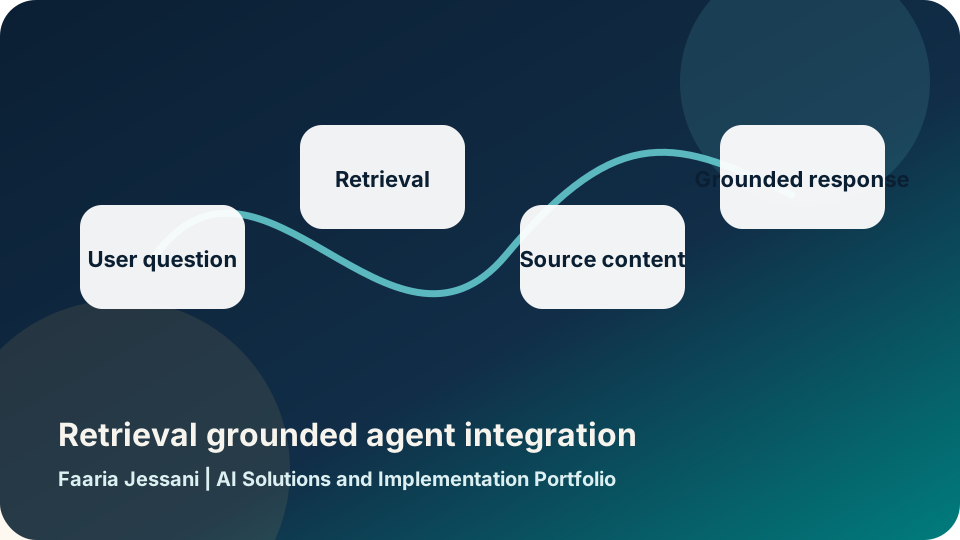
Built and tested workflows that retrieve source information before generating responses and connect agents with external tools.
Problem: AI responses are less useful when they are not grounded in relevant source material.
Approach: Combined retrieval, grounding constraints, and API enabled integrations.
Value: Demonstrates practical agent connectivity with stronger response reliability.
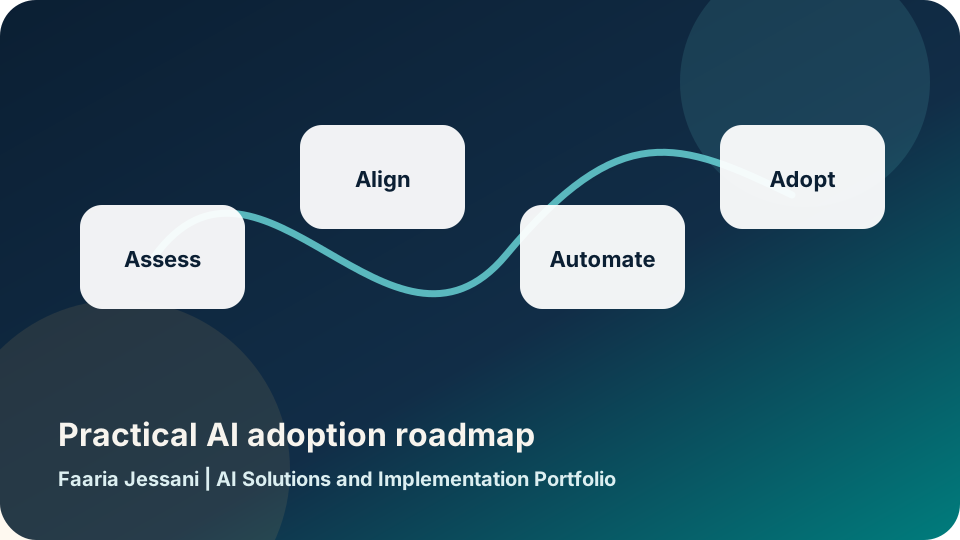
Developed a business first engagement structure for identifying manual work, mapping processes, and prioritizing practical AI use cases.
Problem: Teams often try AI tools before clarifying the workflow and business outcome.
Approach: Built the Assess, Align, Automate, Adopt method with readiness maps and adoption support.
Value: Turns AI adoption into a structured implementation path rather than tool experimentation.
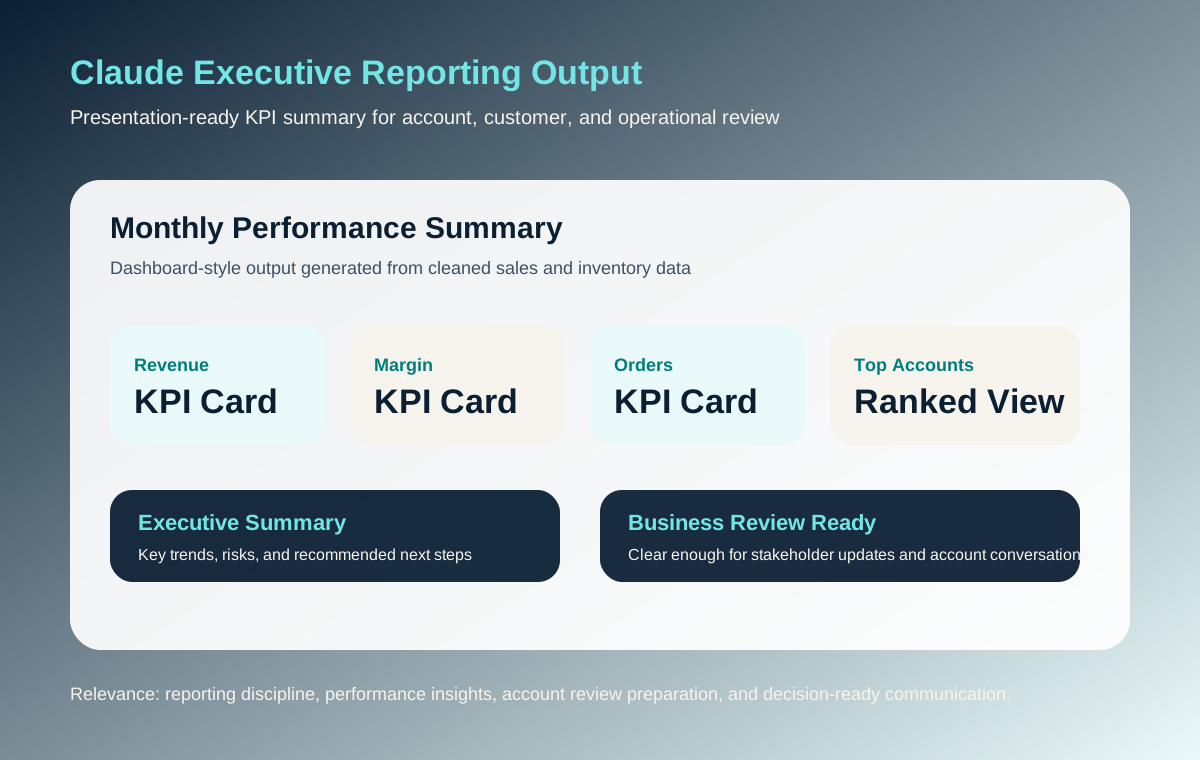
Created a repeatable pipeline that cleans CSVs, validates merged data, summarizes KPIs, and produces dashboard and executive reporting outputs.
Problem: Recurring reporting can become manual, inconsistent, and hard to reuse month after month.
Approach: Standardized data cleanup, KPI summaries, dashboard output, and executive report generation.
Value: Supports customer success, operational reviews, and better decision making through repeatable reporting.
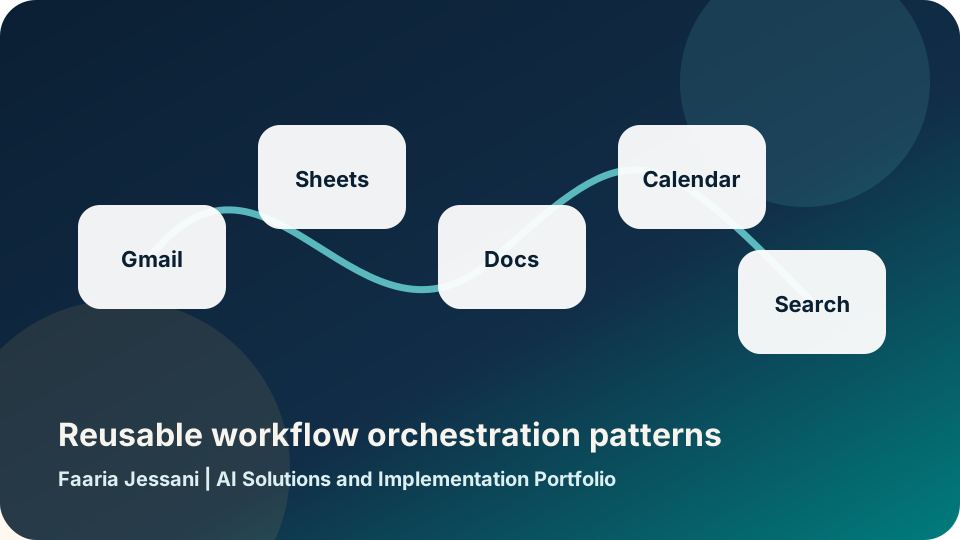
Completed and documented reusable AI agent patterns across Google Workspace, search, memory, triggers, routing, and flow control.
Problem: Agent workflows need reusable patterns for common business actions and safeguards.
Approach: Built examples for sending, retrieving, routing, transforming, and acting across connected tools.
Value: Creates a foundation for intake, routing, retrieval, action, escalation, and reporting workflows.
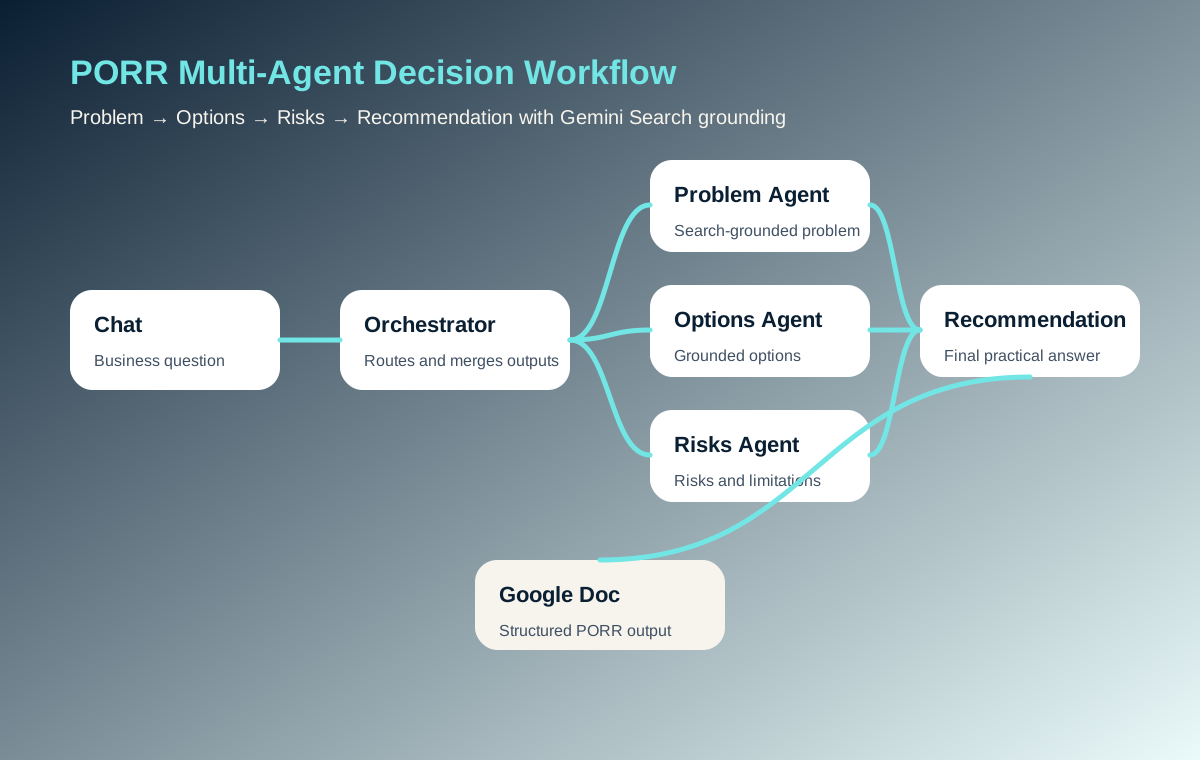
Designed a multi agent decision support workflow that routes a question through specialized agents and merges the result into a structured document.
Problem: Stakeholder decisions need clear problem framing, options, risks, and a recommendation.
Approach: Used specialized agents with search grounding and a consistent output structure.
Value: Supports structured analysis, risk review, and stakeholder ready documentation.
Enterprise implementation foundation
I review AI-enabled workflows through a practical implementation lens: customer experience, business context, workflow clarity, data boundaries, stakeholder readiness, adoption risk, validation, escalation paths, and measurable outcomes.
Is the customer need, workflow context, urgency, relationship history, and desired outcome clearly understood before recommending a solution?
Does the solution align with current process, business rules, platform constraints, customer and workflow context, user needs, operational priorities, and implementation constraints?
Does the workflow move the customer or internal team toward a clear next step with lower effort and less ambiguity?
Are ownership, handoffs, dependencies, and escalation paths clear enough for teams to act quickly?
Watch for unclear ownership, missing documentation, inconsistent processes, data gaps, low adoption readiness, or unsupported automation decisions.
Turn findings into trends, business review insights, documentation updates, training needs, workflow improvements, dashboards, and operational recommendations.
Professional foundation
My strongest angle is not “AI hype.” It is translating business problems into clear workflows, implementation plans, documentation, and practical AI-supported systems that non-technical teams can actually adopt.
Responsible AI & enterprise judgment
My approach to AI automation is grounded in clear data boundaries, validation before high-risk actions, human judgment where appropriate, traceable workflows, defined escalation paths, and careful consideration of privacy and operational risk.
Contact Faaria
Particularly interested in AI solutions, AI enablement, project and implementation management, customer onboarding, and AI enabled operations roles.
Send a short note. I’ll respond directly.